
When you step into a modern barbershop and sit down in the chair, choosing the right fade can completely redefine your appearance. The fade serves as the architectural foundation of contemporary men’s grooming, dictating how clean, structured, and balanced your entire haircut appears. Yet, terms like low fade, mid fade, and high fade are frequently misunderstood or used interchangeably, leading to mixed results in the mirror.
Understanding where these cuts begin, how they interact with your unique head shape, and what level of maintenance they demand is essential. Whether you need a subtle, understated aesthetic for a corporate office or a high-contrast statement cut that commands attention, here is your definitive expert guide to the differences between a low fade, a mid fade, and a high fade—and how to choose the right one for your style.
The Anatomy of a Fade: Height, Closeness, and Shape
Before breaking down individual fade categories, it helps to look at how modern master barbers classify these cuts. A fade is not a standalone haircut; it is a gradient technique that transitions hair from longer lengths on top to shorter lengths on the sides and back. To communicate effectively with your barber, you must understand three core variables:
-
Height: Where the shortest transition point begins on the head (low, mid, or high).
-
Closeness: How short the base goes—ranging from a taper (leaving short hair intact) to a shadow fade (leaving short stubble) or a skin/bald fade (blending down to bare skin).
-
Shape: The path the fade line follows around the head, such as a straight horizontal line, a drop fade (curving down behind the ear), or a burst fade (curving in a semi-circle around the ear).
By mastering these elements, you can customize any height with any closeness to match your exact preferences.
1. The Low Fade: Subtle, Refined, and Versatile
What It Is
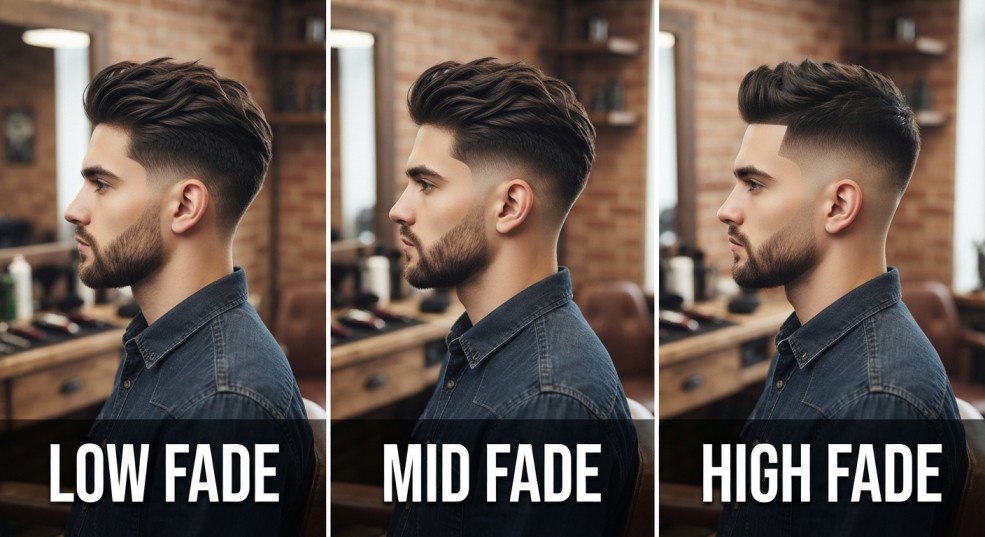
The low fade is a classic, understated choice that begins very low on the head, curving just above the ears and around the neckline at the nape. Because the transition starts close to the bottom perimeter, it removes a minimal amount of hair weight from the sides, leaving the majority of side density and structure intact.
The Vibe & Best For
-
The Vibe: Clean, professional, and sophisticated.
-
Best Suited For: Corporate environments, law offices, financial sectors, and men who want a polished edge without exposing too much scalp. It also pairs seamlessly with fuller beards, creating an effortless transition into facial hair.
-
Face Shapes: Ideal for rectangular, long, or oval face shapes because preserving fullness on the sides adds much-needed horizontal balance.
Maintenance and Styling Tips
Low fades are exceptionally forgiving as they grow out. Because the new growth occurs low near your natural hairline, it looks neat for longer periods, allowing you to stretch visits to the barber to every 3 to 4 weeks.
-
Best Pairing: Pair a low fade with a classic side part, slick back, comb-over, or crew cut. Visit our services page to discuss a custom low fade layout with your master stylist.
-
Barber Wording: Tell your barber, “Keep the fade low around the sides, starting just above the ears, and preserve the weight above it.”
2. The Mid Fade: The Balanced All-Rounder
What It Is
Sitting right in the sweet spot of men’s grooming, the mid fade begins midway up the head—typically right at the temples or just above the ears. It provides a noticeable step up in contrast from a low fade without jumping straight to the dramatic height of a high fade, making it the most universally popular and flexible option in modern barbering.
The Vibe & Best For
-
The Vibe: Modern, balanced, and sharp.
-
Best Suited For: Everyday wear, creative offices, and men who want clear structural definition without going to extremes.
-
Face Shapes: Universally flattering for almost all face structures, particularly round and oval faces where structured side framing adds balance.
Maintenance and Styling Tips
Because the mid fade exposes more skin and sits in a highly visible zone, new growth becomes noticeable faster than a low fade. Plan on scheduling a cleanup or touch-up every 2 to 3 weeks to keep the blend crisp.
-
Best Pairing: Pair a mid fade with a textured crop, modern quiff, pompadour, or messy fringe. Check out fresh visual inspiration of our recent fades in our gallery.
-
Barber Wording: Ask your barber for, “A mid-level fade starting right at the temple line, balanced evenly around the back.”
3. The High Fade: Bold, Sharp, and High-Contrast
What It Is
The high fade is the boldest of the traditional trio. It starts high up on the head—near the temples or stretching toward the crown (parietal ridge)—removing a massive amount of weight and hair from the sides and back very quickly. This creates an intense, striking contrast between the closely cropped sides and the length left on top.
The Vibe & Best For
-
The Vibe: Edgy, high-impact, and athletic.
-
Best Suited For: Statement hairstyles, streetwear aesthetics, active lifestyles, and individuals who want to draw maximum attention to the texture or volume on top of their head.
-
Face Shapes: Excellent for round, square, or diamond face shapes, as the exposed sides and vertical lines help elongate and sharpen facial features.
Maintenance and Styling Tips
High fades demand the highest level of upkeep. Because the contrast line is high and exposed, even a few days of hair growth can blur the gradient. Expect to visit your barber every 1 to 2 weeks to maintain that razor-sharp finish.
-
Best Pairing: Pair a high fade with a French crop, buzz cut, spiky top, or structural flat top. Review our standard cut rates and maintenance options on our pricing page.
-
Barber Wording: Instruct your barber, “Take a high fade starting well above the temples near the crown, keeping the sides clean and tight.”
Comprehensive Comparison Matrix
To help you decide which fade aligns with your lifestyle, maintenance routine, and professional requirements, review the comparison breakdown below:
| Feature | Low Fade | Mid Fade | High Fade |
| Starting Point | Just above ears and neckline | Midway up at the temples | High up near crown/parietal ridge |
| Contrast Level | Subtle and conservative | Balanced and versatile | Bold and high-impact |
| Maintenance Schedule | Every 3–4 weeks (grows out cleanly) | Every 2–3 weeks (moderate upkeep) | Every 1–2 weeks (frequent touch-ups required) |
| Professional Suitability | High (ideal for corporate/conservative roles) | Moderate to High (versatile for most workplaces) | Low to Moderate (best for creative or casual fields) |
| Best Face Shapes | Long, oval, rectangular | Universal / all face shapes | Round, square, diamond |
Expert Tips for Communicating with Your Barber
Achieving the exact haircut you envision comes down to clear communication. When you sit in the chair, avoid vague terms and follow these expert rules:
-
Specify Height, Closeness, and Shape: Tell your barber the exact starting height (low, mid, or high), how short the base should go (skin, shadow, or taper), and whether you want a straight line or a curved drop.
-
Consider Your Hair Density: If you have fine or thinning hair, sticking to low or mid fades preserves enough density to prevent looking scalp-heavy. If you have thick or curly hair, high fades and skin fades create incredible structural contrast.
-
Account for Hair Shrinkage: If you have curly or coily hair, remember that curls shrink when dry. Point out your fade line based on dry hair, not freshly washed wet hair, to prevent your barber from cutting the fade higher than intended. To learn more about the background and expertise of our team, visit our about page.
Conclusion: Finding Your Signature Cut
Choosing between a low, mid, and high fade ultimately boils down to a balance between your personal aesthetic, professional environment, and how often you want to visit the barbershop. If you want timeless refinement that requires minimal upkeep, the low fade is your best ally. If you want an adaptable, universally flattering middle ground, the mid fade never misses. If you are chasing maximum contrast, bold geometry, and a striking modern edge, step up to the high fade.
Ready to upgrade your grooming routine? Contact us today or drop by Barbershop Billys to consult with our master barbers. Explore our pricing page and review our full menu of services to secure your chair for your next fresh cut.